Advocacy

We speak up with and for Islanders living with spinal cord injury and other physical disabilities, so Prince Edward Island becomes a place where everyone can get in, get around and take part.

Nothing about us without us

Removing barriers, one conversation at a time

Canada has set a goal to be barrier-free by 2040. On PEI, that means accessible rides, homes, services and public spaces, and supports that cover what a disability really costs. We bring the voices of our members to the people who can make that happen.

  • Lived experience first

    Our members and peer volunteers live with spinal cord injury. We speak from what we deal with every day.

  • Working with decision-makers

    We meet with government departments, municipalities, health care and businesses, and bring practical solutions, not just complaints.

  • Raising awareness

    Through events, media, schools and our accessibility reviews, we help Islanders see barriers they never noticed.

Key facts

Where we’re pushing for change

These are the issues our members raise most. Choose one to jump to it.

Accessible transportation

If you can’t get there, you can’t take part. Getting to work, appointments, school and friends is still the barrier our members raise most.

The situation on PEI

For years Charlottetown had no wheelchair-accessible taxis, even after the province raised its subsidy to $30,000 per company. Summerside’s cab company runs four.

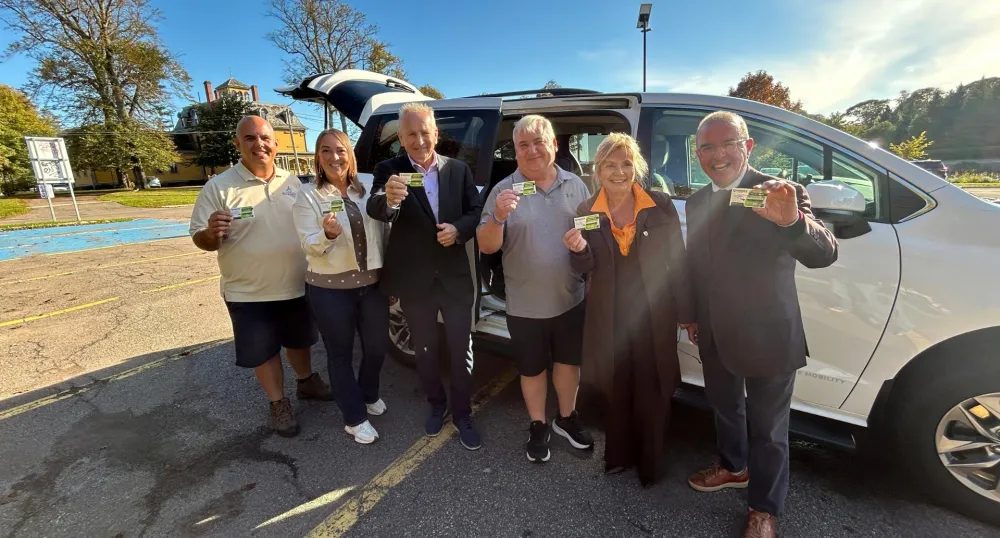
On October 2, 2026, Cudmore’s Accessible Cab began on-demand, wheelchair-accessible taxi service in Charlottetown, Stratford and Cornwall. It’s a two-year pilot run by Pat & the Elephant and funded by the province and the three municipalities, and SCI PEI sits on its committee. It’s a big step, but one vehicle can’t meet every need, and a pilot can end.

Outside the capital region, choices shrink fast. Rural Islanders depend on a few specialized operators that must be booked ahead, and costs add up quickly.

Leaving the Island brings its own barriers. People without a vehicle cross the Confederation Bridge on an on-call shuttle. The Wood Islands ferry is running ageing vessels while the replacement for the Holiday Island is delayed with no firm date.

What we’re asking for

  • Make Cudmore’s Accessible Cab permanent after the pilot, and add vehicles as demand grows
  • Require a share of accessible vehicles as a condition of taxi licensing in every municipality
  • Fully accessible public transit, urban and rural: low-floor buses, ramps, accessible stops cleared of snow
  • An affordable, door-to-door accessible service for people who can’t use fixed-route buses
  • Accessible design built into the new ferry and bridge shuttle from the start, with input from wheelchair users

Need help now?

All accessible transportation on PEI

Sources for this section

A PEI Accessibility Act

Most provinces have an accessibility law with standards and deadlines. Prince Edward Island does not.

The situation on PEI

The federal Accessible Canada Act aims for a barrier-free Canada by 2040, but it only covers federally regulated services such as banks, Canada Post, the Confederation Bridge, ferries and the airport.

Everything else that shapes daily life on PEI (shops, restaurants, schools, health care, municipal services, provincial buildings) has no enforceable accessibility standards, timelines or anyone responsible for checking.

Without a law, progress depends on goodwill, and people with disabilities are left to fight the same barriers one complaint at a time.

What we’re asking for

  • A PEI Accessibility Act with enforceable standards and real deadlines, aligned with the 2040 national goal
  • Standards written with people with disabilities, covering the built environment, transportation, services, employment and information
  • An independent accessibility advisory council where most members live with disability
  • Public progress reports, so Islanders can see what’s changing

Need help now?

About the Accessible Canada Act

Sources for this section

Disability supports and income

A spinal cord injury brings huge costs: wheelchairs, ramps, lifts, vehicle changes and daily care. Supports need to keep up with what things actually cost.

The situation on PEI

AccessAbility Supports is PEI’s main disability program. It helps with equipment, personal care, respite and home and vehicle changes, and now serves more than 3,000 Islanders a month.

The caps haven’t kept pace: up to $10,000 for home modifications every 10 years and $6,000 for vehicle modifications every 8 years. A ramp, a widened bathroom or a lift can quickly cost more.

You must apply before age 65, and many people still find the application complicated. The province announced improvements in 2026, including navigators and more flexible funding. We’re watching to make sure they reach people.

Federally, the Canada Disability Benefit began in July 2025 for people aged 18 to 64. It requires the Disability Tax Credit, which many eligible Islanders have never applied for.

What we’re asking for

  • Raise home and vehicle modification limits to reflect real costs, and review them every year
  • Remove the age-65 cutoff for new applicants, since injuries don’t stop at 65
  • Quick decisions on equipment, so no one waits months for a wheelchair or seating
  • A simple, plain-language application, with help to apply
  • Make sure the Canada Disability Benefit is never clawed back from provincial supports

Need help now?

AccessAbility SupportsCanada Disability Benefit

Sources for this section

Accessible housing

Too many Islanders leave hospital with nowhere accessible to live, or stay in long-term care because their home can’t be adapted.

The situation on PEI

Wheelchair-accessible apartments are scarce and often have long waits. People are offered units one at a time, case by case.

PEI adopted the 2020 National Building Code in March 2024, but its accessibility rules are aimed at public buildings, not most new homes.

The PEI Home Renovation Program can help lower-income homeowners, with grants of up to $16,000 for households with a disability, but income and home-value limits leave many people out.

What we’re asking for

  • A set share of new housing, especially publicly funded housing, built fully accessible
  • Basic “visitable” design in all new homes: a step-free entrance, wider doors and an accessible washroom on the main floor
  • A public list of accessible units and wait times
  • Renovation help that matches real costs, available to more households

Need help now?

Accessible housing listings

Sources for this section

Health care and rehabilitation

The months after an injury shape the rest of a person’s life. Good rehab, equipment and peer support close to home make all the difference.

The situation on PEI

The Provincial Rehabilitation Unit at the Queen Elizabeth Hospital in Charlottetown serves Islanders with spinal cord injuries. Some specialized care means travelling to Halifax, away from family.

Getting the right wheelchair, cushion and seating can take a long time, and the wrong equipment causes pressure injuries and pain.

Many clinics still have exam tables, scales and imaging that wheelchair users can’t get onto, so routine check-ups get skipped.

What we’re asking for

  • Peer support offered at the bedside to every Islander with a new spinal cord injury
  • Timely seating and mobility assessments, and equipment funded without long waits
  • Home care and attendant care that let people live at home rather than in long-term care
  • Accessible exam rooms, height-adjustable tables and lifts in clinics across the Island

Need help now?

Our Peer Support program

Sources for this section

Getting around your community

Curbs, steps, icy sidewalks and blocked parking spots decide whether someone can go out at all, all year round.

The situation on PEI

Accessible parking spots are often taken by people without permits, or buried by plowed snow.

Sidewalks, curb cuts and bus stops that aren’t cleared in winter cut people off for months.

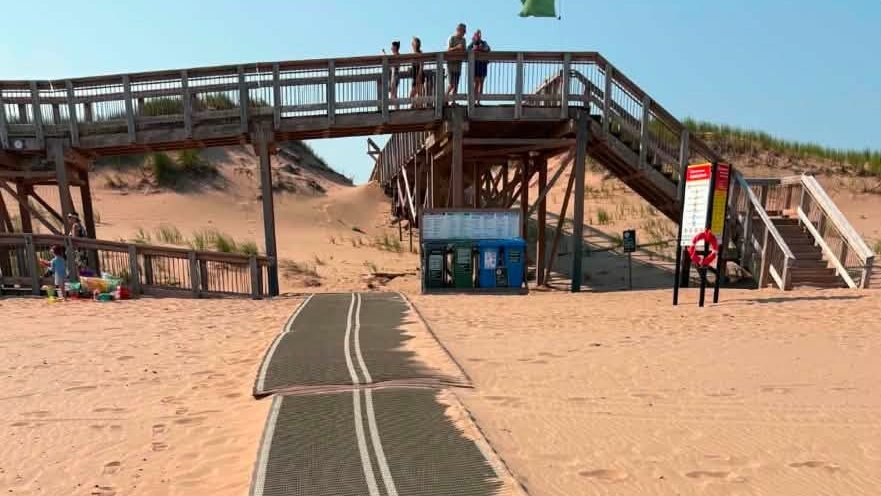
Beaches and parks are getting better: Parks Canada lends beach wheelchairs at Cavendish and Brackley, and in August 2026 we helped host PEI’s first Access Beach Day at Stanhope. But most provincial parks and public beaches still have no accessible equipment.

What we’re asking for

  • Stronger enforcement and higher fines for parking in accessible spots without a permit
  • Snow-clearing plans that put curb cuts, accessible parking and bus stops first
  • Beach mats and beach wheelchairs at provincial parks, not just the national park
  • Accessibility reviews before new public spaces are built, not after

Need help now?

Accessible places on PEIAccessibility Reviews

Sources for this section

Emergency preparedness

When the power goes out, a power wheelchair, lift, ventilator or pressure mattress stops working. Storm plans need to include us.

The situation on PEI

After Post-Tropical Storm Fiona in 2022, Islanders who depend on powered equipment were left without help for days, and some disability supports were left out of storm relief.

PEI still has no registry of people who rely on electricity for medical or mobility equipment. Nova Scotia advocates pushed for one after Fiona, and Halifax created one.

What we’re asking for

  • A voluntary registry so utilities and emergency services know who needs power or a check-in first
  • Accessible warming and charging centres, with accessible transportation to reach them
  • Storm relief that automatically includes people receiving disability supports
Sources for this section

Work, voting and community life

People with spinal cord injuries are workers, volunteers, voters and leaders. Barriers to taking part hold the whole Island back.

The situation on PEI

Workplaces often lack accessible entrances, washrooms and flexible arrangements, and many employers don’t know that grants for workplace changes exist.

Polling stations, council chambers and public meetings aren’t always accessible, which keeps people with disabilities out of decisions that affect them.

PEI’s municipal elections are on November 2, 2026, a good time to ask candidates where they stand.

What we’re asking for

  • Accessible polling stations, plus easy home and mail-in voting options
  • Accessible council meetings, with captioning and online participation
  • Employers using workplace accessibility grants, and governments hiring people with disabilities
  • People with disabilities on every municipal and provincial advisory board

Need help now?

Sources for this section

Our advocacy in action

Programs and projects where we turn these goals into real change.

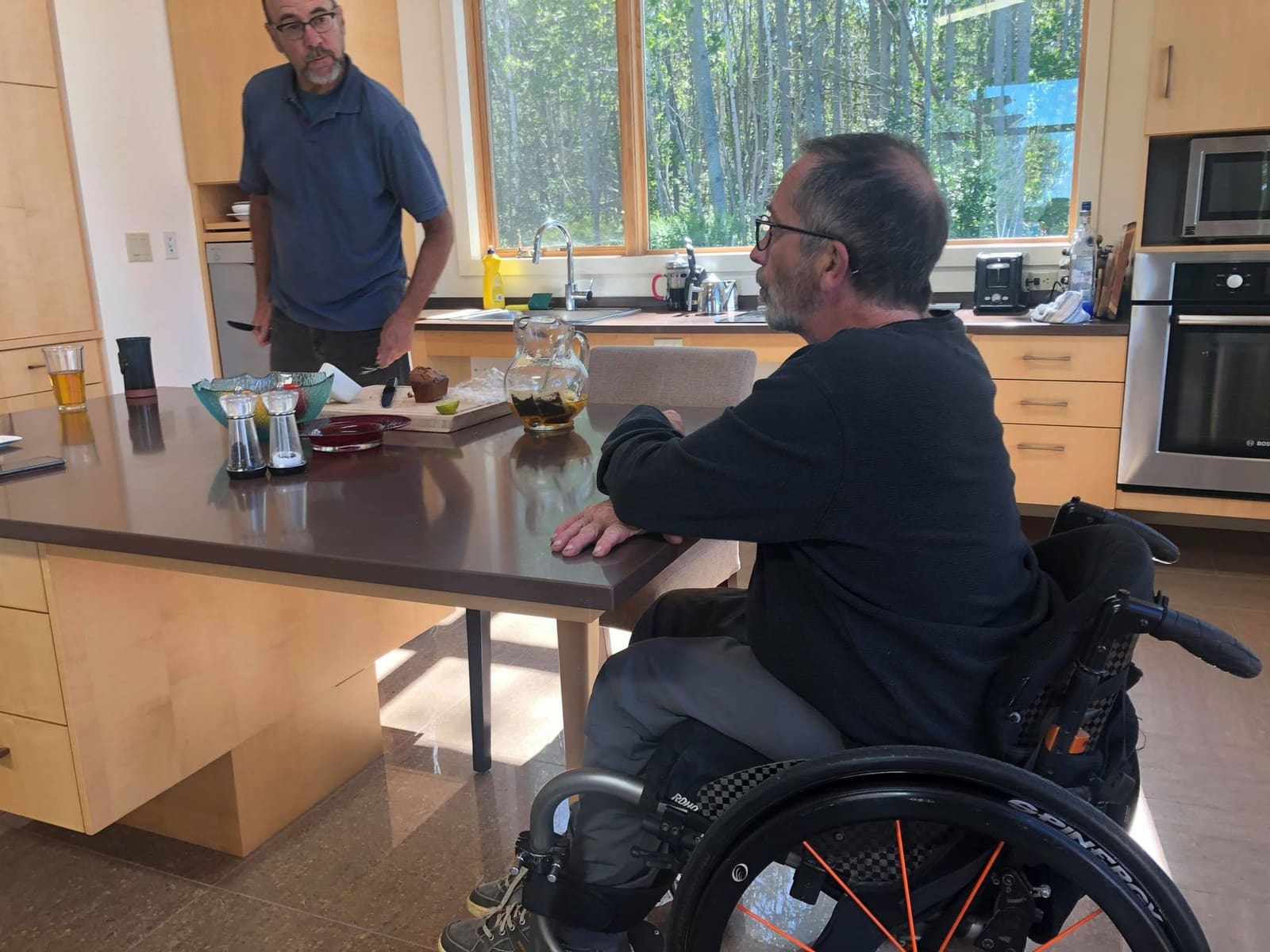
  • A man in a wheelchair at a kitchen island in an accessible home kitchen, talking with another man

    Accessibility Reviews

    Our peer leaders, trained by Spinal Cord Injury BC, visit businesses and venues to point out barriers and suggest practical fixes, from door pressure to washroom layout.

    Book or learn about a review

  • Six people hold up cards beside Cudmore’s wheelchair-accessible van, its rear hatch and side door open

    Accessible taxis

    After more than a decade of pushing, Cudmore’s Accessible Cab hit the road in October 2026, and SCI PEI helped bring it to life. Now we’re working to make it permanent.

    Book Cudmore’s Cab

  • A roll-out beach mat running across the sand to the boardwalk stairs at Stanhope Beach

    Access Beach Day

    In August 2026 we joined ParaSport & Recreation PEI and Parks Canada for PEI’s first Access Beach Day at Stanhope, with beach mats and floating wheelchairs.

    Our asks for parks and beaches

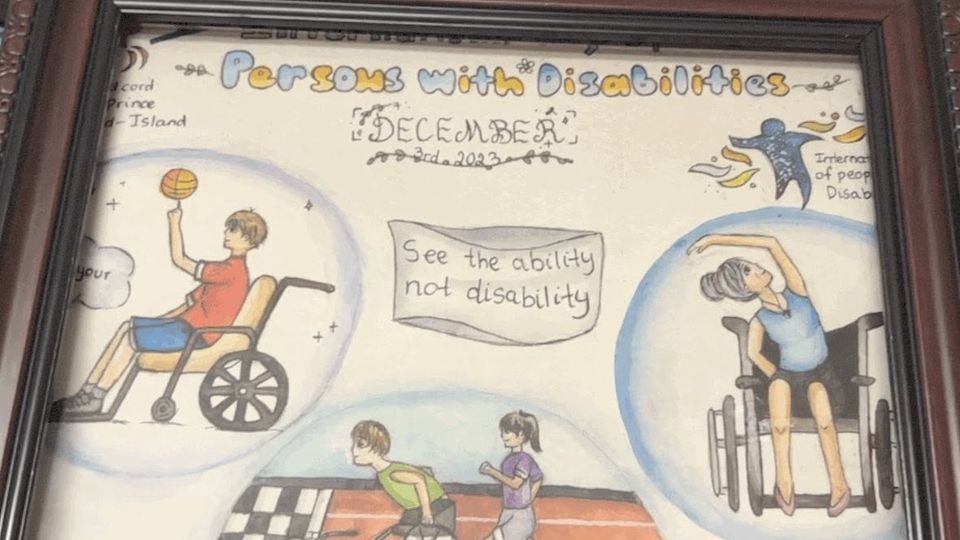
  • Framed student artwork for the International Day of Persons with Disabilities, December 3, 2023, showing people in wheelchairs playing sports and the message “See the ability, not disability”

    Student Advocacy Art Program

    Students use art to explore what accessibility means and share what they find. Young voices change how a community thinks.

    About the art program

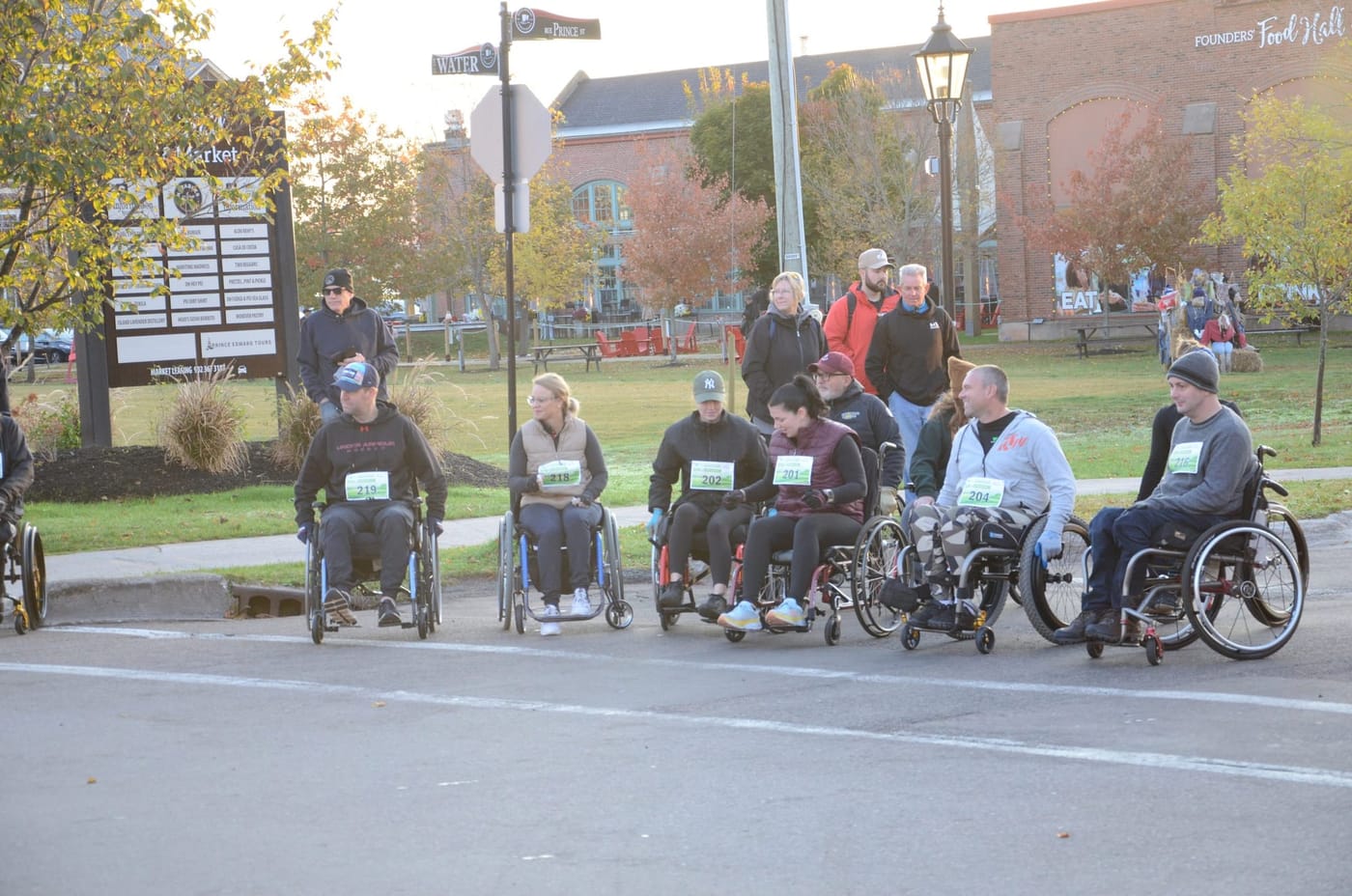
  • Wheelchair users lined up at the start line of a race on Water Street in Charlottetown

    PEI Marathon 2K wheelchair race

    Each year we roll in the PEI Marathon’s 2K wheelchair event to show what’s possible and to call for an accessible road and sidewalk network.

    PEI Marathon

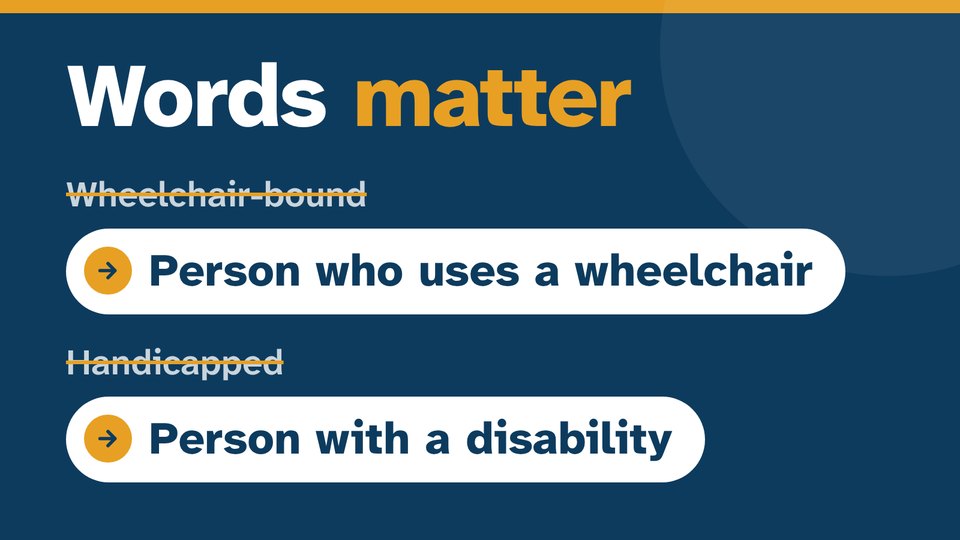
  • Words matter. Say “person who uses a wheelchair” instead of “wheelchair-bound”, and “person with a disability” instead of “handicapped”.

    Language Guide

    Words shape attitudes. Our guide shows respectful, person-first language for talking and writing about disability.

    Read the Language Guide

How you can help

Change happens faster when decision-makers hear from many Islanders. Every story and every report helps.

  • Report a barrier

    Couldn’t get in somewhere? No accessible ride? Tell us what happened and where.

    Email us

  • Share your story

    Real experiences carry weight with government and media. We’ll only share with your permission.

    Tell your story

  • Talk to your MLA

    Ask your MLA to support a PEI Accessibility Act and better AccessAbility Supports.

    Find your MLA

  • Ask your candidates

    Municipal elections are November 2, 2026. Ask candidates about accessible taxis, sidewalks and snow clearing, then tell us what they said.

    Share their answers

Facts on this page were checked in October 2026. Spotted something out of date? Let us know.